
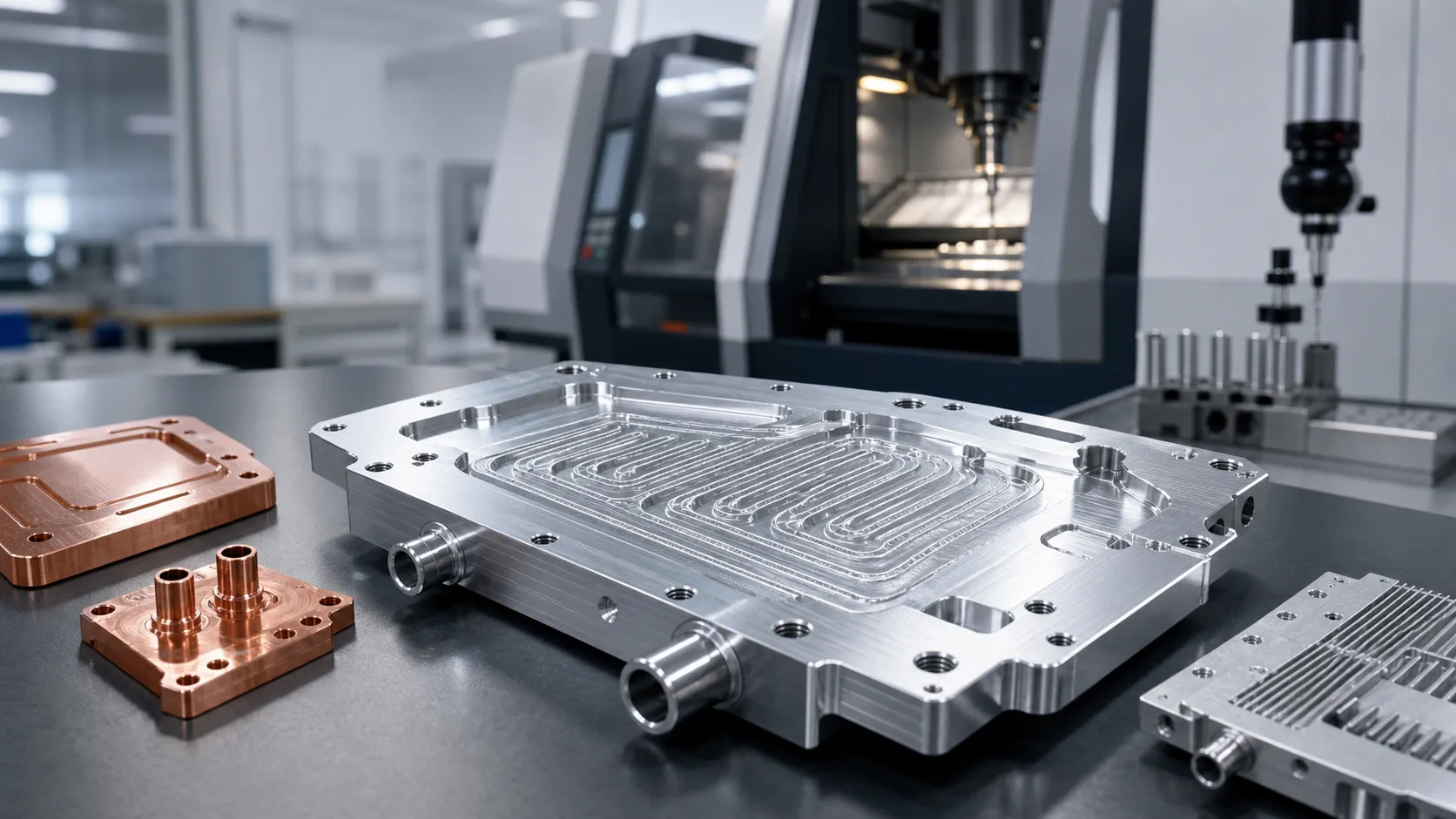
Liquid cooling plates and thermal management parts are becoming more important in electric vehicles, power electronics, AI servers, and communication equipment. But for many buyers, the real manufacturing risk is not only whether the part can be machined to the drawing.
The bigger question is: can the contact surface remain stable from prototype to batch production?
A cold plate, heat sink base, liquid cooling plate, or thermal structure part may look simple. In reality, its performance depends on flatness, surface contact, hole position, sealing surface quality, burr control, and batch consistency. If one of these details drifts, the customer may face poor thermal contact, unstable assembly, leakage risk, rework, or long-term performance fluctuation.
For thermal management parts, the contact surface is where heat transfer begins. If the surface is not flat enough, the actual contact area between the cold plate and the heat source is reduced. Even when thermal interface material is used, poor flatness can still create inconsistent contact pressure and local thermal resistance.
This is why flatness often matters more than a visually smooth surface. A part may look clean, but if the mounting surface is slightly warped, the customer may still see unstable thermal performance after assembly.
For EV battery systems, liquid cooling plates help control battery temperature under high-power operation. For AI and data center equipment, direct liquid cooling is becoming more important as chip power density increases. In both markets, the manufacturing quality of thermal contact surfaces is moving from a “machining detail” to a purchasing risk.
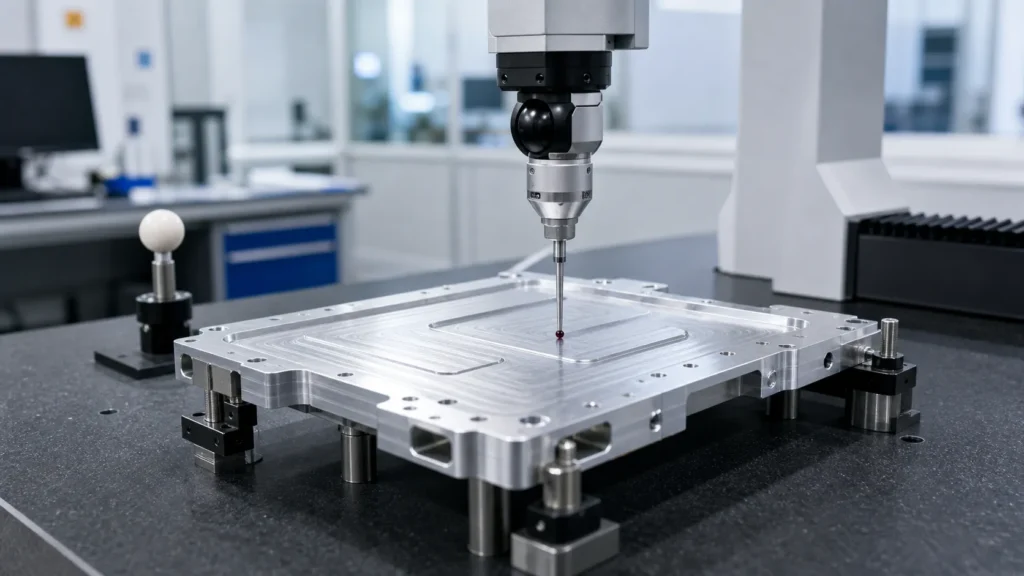
For CNC machined liquid cooling plates and thermal structure parts, common risks include:
These risks are exactly why prototype success does not always mean batch production stability.
At AZ Precision CNC Machining, the focus is not only “can we make the first piece.” The focus is whether the process can be standardized, inspected, and repeated.
For thermal management parts, this means reviewing the part from three angles:
Process standardization
Machining sequence, fixturing, toolpath, allowance control, and stress-release planning should be defined early. This reduces the risk of deformation and process drift when the project moves from sample to batch production.
Quality control
Key dimensions, mounting surfaces, flatness, hole position, burr-sensitive areas, and surface condition should be checked through a suitable inspection plan. For critical parts, first article inspection, CMM inspection, in-process checks, and batch sampling can help catch risk before it reaches the customer’s line.
Traceability and improvement
When a batch issue occurs, the supplier should be able to trace the process record, identify the cause, and prevent the same issue from repeating in the next batch.
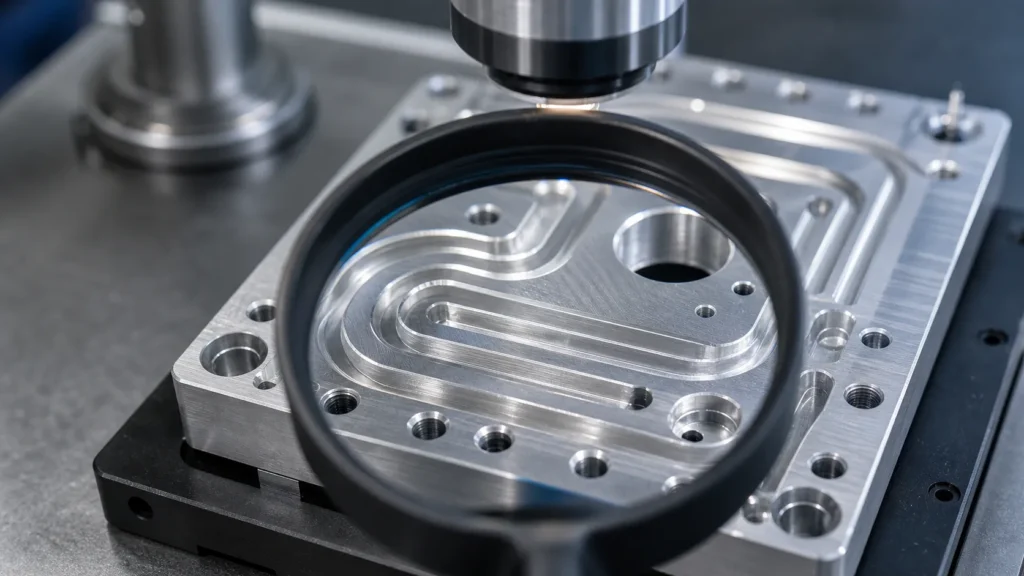
Buyers should review flatness and surface contact requirements carefully when the part is used in:
If the part has a thermal contact surface, mounting holes, sealing areas, and tight assembly requirements, dimension alone is not enough. The supplier should understand how machining, inspection, and batch control affect the final application.
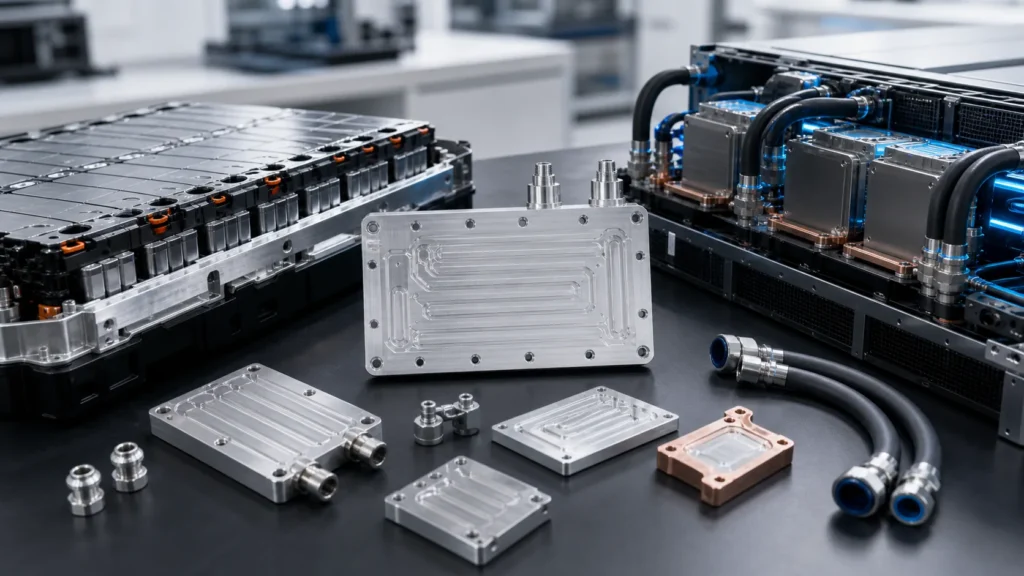
For thermal management parts, the strongest supplier is not the one that only says “we can machine it.” A stronger supplier can explain where the part may fail, how the process is controlled, and how batch consistency is maintained.
That is the difference between a prototype supplier and a production partner.
Need CNC machined liquid cooling plates, heat sink bases, or thermal structure parts? Upload your drawing for a DFM review and manufacturing risk evaluation.